Last night, the Fed released the results of the penultimate meeting of the year. Overall, no major policy changes were made, and no striking announcements were issued. Fed chair Kevin Warsh said inflation remains elevated, but that the current state of the economy and the labor market gives the regulator room to raise borrowing costs further to cool the consumer price index. In other words, the Fed continues to follow a clearly stated trajectory—raising the policy rate at roughly every other meeting until inflation shows signs of slowing.
What does this tell us? First, there is no explicit terminal rate the Fed is aiming for or a ceiling above which it will not tighten. If after the third hike — tentatively expected in March next year — inflation is still rising (regardless of the drivers), the Fed will have to keep tightening. For the pound, this outlook is not a problem: sterling trades technically, and GBP/USD traders do not hit the sell button every day on every pretext. Markets are also watching the Bank of England, which could begin its tightening cycle as soon as next week. For the euro, however, this is problematic because the market has seen no positive factors for the currency for two months.
In practice, the euro is either falling or flat. So we continue to point out that the euro's decline over the past two months is not primarily due to central bank policy, geopolitical tensions (the pound is also a risk currency), protests within EU countries (those have largely faded), or France's budget problems (the US also has budget issues). The euro falls because the euro falls. Unfortunately, there is no better explanation.
Returning to Kevin Warsh and his innovation. From 2027 the Fed will again hold eight meetings per year as before, but one meeting will be devoted to discussing monetary strategy rather than voting on the policy rate; no policy communique will be issued on that occasion. From 2028 there will be two such "non-voting" meetings, and the FOMC will make rate decisions at only six meetings per year.
Warsh explained the change by citing the need to leave intervals rich in data for analysis and to allow time for intellectual reflection and strategic discussion. At present Warsh's initiative raises questions: why is it needed at all? The eight-meeting schedule has been used by the Fed since 1981. No prior Fed chair thought separate strategy meetings were necessary. In the past there were occasional proposals to cut the number of rate meetings, but those ideas were rejected because the central bank would lose the ability to react quickly to economic changes. Warsh is not deterred; he believes time to think will benefit the economy and the Fed. In any case, the Fed is leaving itself progressively less room to maneuver.
Trading recommendations for EUR/USD:
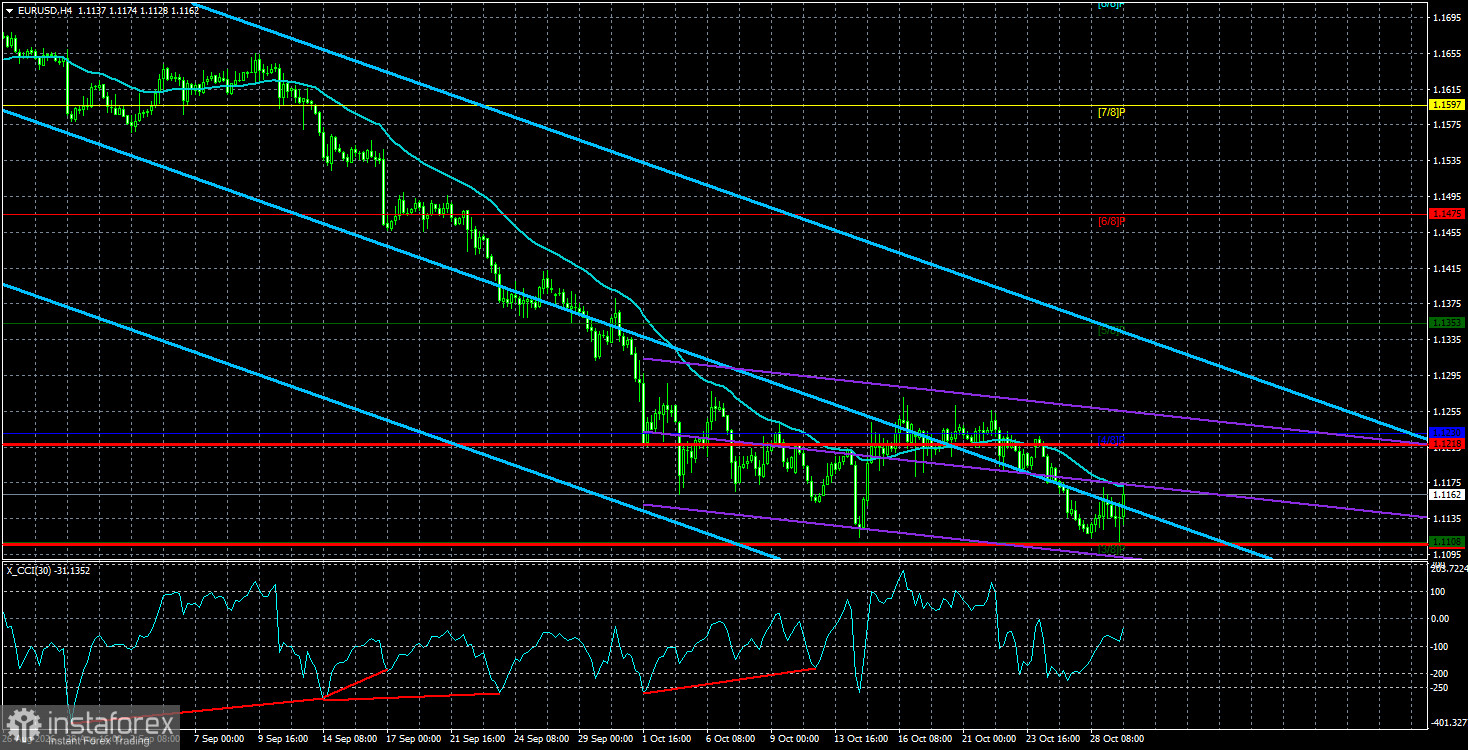
EUR/USD continues to move lower, but we still view the decline as a correction ahead of a new uptrend. The global fundamental backdrop for the dollar remains unfavorable, yet in 2026 geopolitics first and then the Fed's hawkish stance provided strong support for the US currency. While price trades below the moving average, you can consider shorts with targets at 1.1108 and 1.0986. Above the moving average longs are relevant with targets at 1.1230 and 1.1353.
Trading recommendations for GBP/USD:
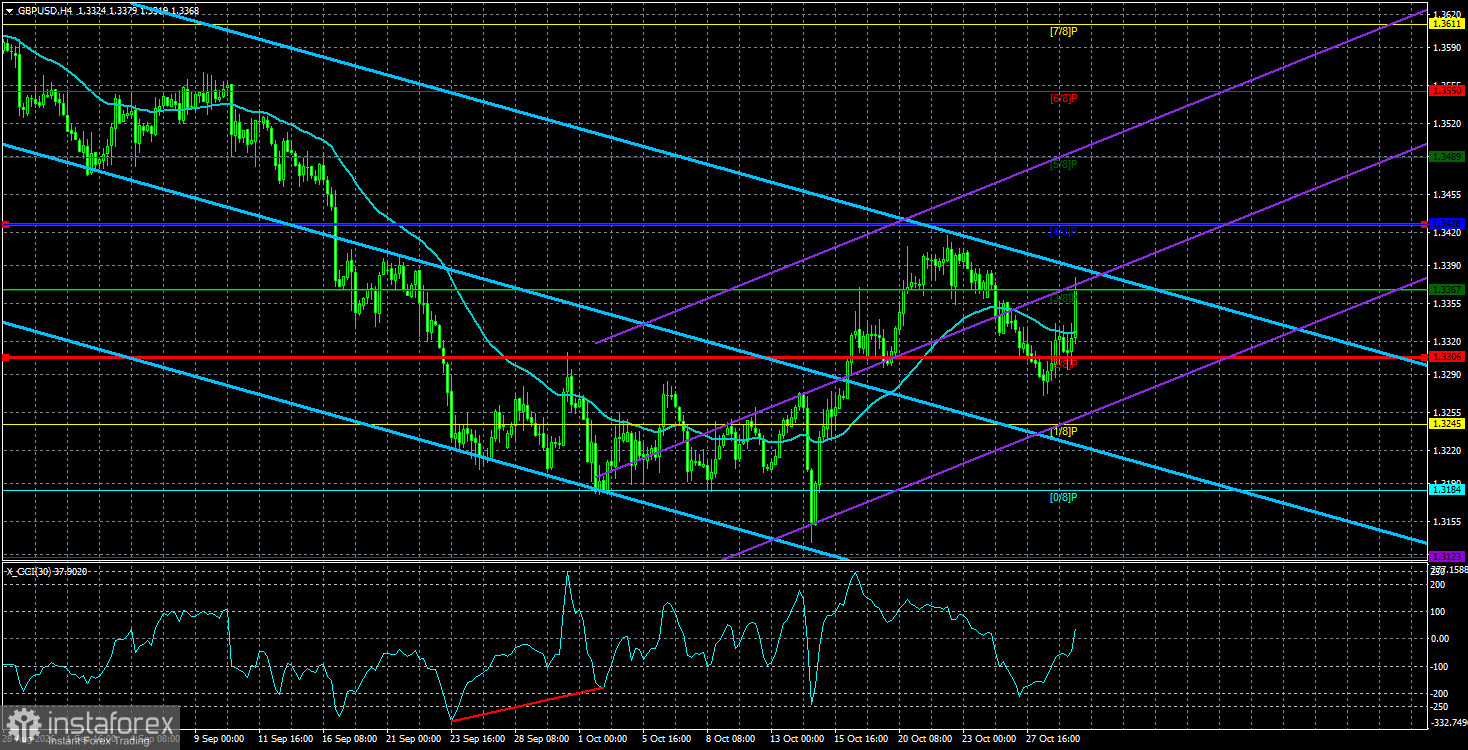
GBP/USD has begun an uptrend that could become a lasting trend. Donald Trump's policies will continue to pressure the US economy, so we do not expect long-term dollar weakness. 2026 has so far been positive for the dollar because geopolitics and inflation pushed capital to safety and forced the Fed back to tightening. However, on the weekly timeframe, the pair remains flat between 1.3150 and 1.3780 within a four-year uptrend, which supports a medium-term bullish view on sterling. Consider longs with targets at 1.3428 and 1.3489 if the price trades above the moving average. Price below the moving average allows downside trading with targets at 1.3245 and 1.3184.
Explanations for the illustrations:
- Regression channels help identify the current trend. If both channels point in the same direction, the trend is strong.
- The moving average (settings 20, 0, smoothed) defines the short-term tendency and the direction in which to trade.
- Murray levels are target levels for moves and corrections.
- Volatility bands (red lines) mark the likely price channel for the next 24 hours based on current volatility.
- The CCI indicator entering oversold (below -250) or overbought (above +250) territory signals an impending trend reversal.